Treatment
Root canal treatment
When a tooth can be saved, timely root canal treatment can help preserve its natural structure and function.
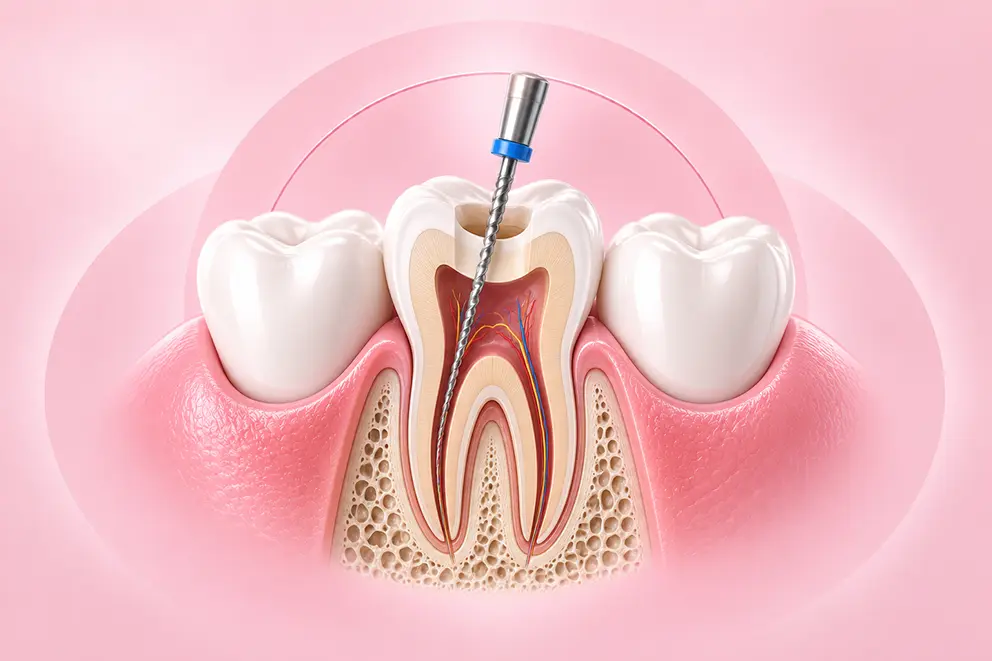
The treatment removes infected or inflamed tissue from inside the tooth, cleans and seals the canals, and protects the tooth so you can keep using it.
Is it right for you
Signs you may need an evaluation
Some teeth give clear warning signs, while others show changes only on an X-ray. If you notice any of these, it's worth having the tooth checked.
- Sensitivity to hot or cold that lingers after the trigger is gone
- Pain when biting or chewing
- Swelling, tenderness or a pimple-like bump on the gum
- A tooth that has darkened after an injury
- Deep decay, a crack or a large old filling
The process
How root canal treatment works
Every step is explained before it begins, so you always know what's happening and why.
Diagnosis
We examine the tooth and take a digital X-ray to understand the extent of the problem and whether the tooth can be saved.
Numbing and isolation
Local anaesthesia numbs the area, and the tooth is isolated to keep it clean and dry.
Cleaning the canals
The infected or inflamed tissue is removed, and the canals are carefully cleaned and shaped.
Sealing
The canals are filled and sealed to help prevent bacteria from getting back in.
Restoring the tooth
A filling or crown restores the tooth. A crown is often advised for back teeth, which take more biting force.
Review
We check how the tooth has settled and make sure your bite feels comfortable.
Your options
What your treatment may involve
The right option depends on your oral health and goals. Dr. Nisha will explain which ones suit you, and why.
Weighing it up
Benefits and considerations
Clear, honest information helps you make a decision you feel good about.
What it can offer
- Keeps your natural tooth where possible
- Treats the source of infection inside the tooth
- Helps restore comfortable biting and chewing
- Avoids the gap that removing a tooth would leave
What to keep in mind
- The tooth may feel tender for a few days afterwards
- Back teeth often need a crown for long-term protection
- Delaying treatment can allow infection to spread
- Some teeth are too damaged to save, and you'll be told if so
Suitability is confirmed only after a clinical examination, and results vary from person to person.
Good to know
Questions patients ask
Can't find your question here? Ask the clinic team on WhatsApp.
Is root canal treatment painful?
Treatment is carried out under local anaesthesia, and the aim throughout is to keep you comfortable. Mild soreness for a few days afterwards is common and usually settles with simple care.
How many visits will I need?
Many root canals are completed in one or two visits. Teeth with more complex canals or active infection may need additional appointments.
Do I need a crown afterwards?
Not always. Front teeth can sometimes be restored with a filling, but back teeth are often advised a crown because they take more chewing force.
Can antibiotics fix the problem instead?
Antibiotics may ease some symptoms, but they cannot remove the infected tissue inside the tooth. The source of the infection still needs treatment.
What happens if I wait?
An infected tooth rarely heals on its own. Waiting can let the infection spread and may leave a tooth that can no longer be saved.
Talk to Dr. Nisha about root canal treatment
Understand your options, then decide at your own pace.